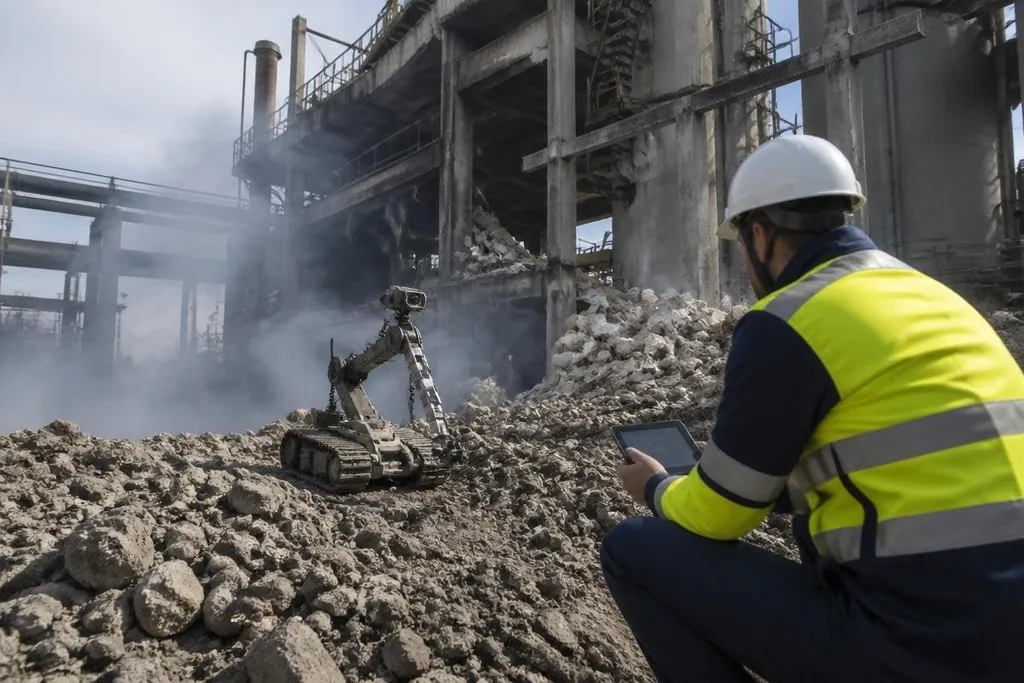
A robot can enter a place filled with heat, toxic gas, radiation, unstable ground, or falling debris without putting a person in that space. The value comes from distance: sensors collect information, machines do the physical work, and people stay where they can make decisions safely.
The case gets stronger when the task is repetitive, hard to reach, or dangerous after a small mistake. A robot does not remove every risk, but it can move the first inspection or handling step away from a person.
Quick read
- Robots keep people away from direct exposure to heat, chemicals, radiation, and unstable structures.
- Cameras, LiDAR, gas sensors, thermal sensors, and force sensors turn dangerous spaces into data.
- Human control still matters when the robot loses communication, traction, or a clear view.
Distance changes the risk
Many hazardous jobs begin with a simple need: find out what happened. A ground robot can enter a damaged building, inspect a pipe, or check a storage area before a technician crosses the threshold. A drone can look over a roof, tower, or industrial site without sending someone up first.
That first inspection can guide the next move. If a camera shows a blocked route, the team can choose another entry point. If a gas sensor detects a leak, people can bring the right protective equipment and shut down nearby systems before entering.
The robot does not make the site harmless. It changes who faces the first exposure. That distinction matters because many incidents happen during early checks, when the team has the least information.
Sensors turn danger into information
A robot can carry sensors that a person cannot safely hold in the same place for the same length of time. Thermal cameras can show hot surfaces or heat patterns. Gas sensors can check for a substance that has no visible warning. LiDAR measures distance with laser pulses, helping a robot build a map of rooms, tunnels, or damaged structures.
The sensor result still needs a person who understands the site. A hot area may come from a damaged machine, a normal process, or a reflection. A map may miss a narrow opening or change after debris moves. Good operation joins sensor data with site knowledge instead of treating a screen as a complete answer.
A robot sent into a chemical leak still needs a clear job, safe operating limits, and a person who can stop it. Reports on robots in hazardous sites can show the machine, sensor package, and task being tested before you decide what work belongs outside the human work area.
Machines handle the work people should avoid
Inspection is only one use. Robots can carry tools, move samples, clear loose material, turn valves, or transport equipment through a contaminated area. Remote-controlled arms can handle objects inside a hot cell or other restricted space while an operator works from a separate room.
The design has to match the hazard. Wheels may work on a smooth plant floor but fail on rubble. Tracks can cross rough ground, though they may damage a surface or use more power. A drone can reach a high structure, yet wind, dust, battery life, and signal range limit its working time.
The control link matters just as much. A robot that stops when its signal drops is easier to manage than one that keeps moving without clear instructions. Emergency stops, return-to-home behavior, sealed housings, and spare communication paths all affect how the system behaves after a fault.
What robots cannot solve
A robot still needs maintenance, a charged battery, a working sensor, and a route through the site. Smoke, water, dust, glare, metal structures, and thick walls can weaken sensing or communication. The robot may also become part of the recovery job if it tips over or loses power.
Training remains part of the work. Operators need to read sensor limits, control the machine, and understand when the data is too weak for a decision. A remote camera does not replace a safety plan, a site survey, or protective equipment.
I’d choose a robot for the first look at a dangerous site, but I wouldn’t send one in without a recovery plan.
A practical buying checklist
Before choosing a robot for hazardous work, check these points:
- Name the hazard: heat, gas, radiation, water, unstable ground, or another specific threat.
- Set the distance: decide how far the operator must remain from the work area.
- Match the sensors: confirm the robot can detect the condition you need to measure.
- Test the route: check doors, slopes, debris, signal range, and lighting before a live job.
- Plan the failure: define what happens after a stalled motor, lost link, low battery, or trapped robot.
- Set the handoff: state when a trained person must review the data or take control.
The best fit is a task with a clear hazard, a repeatable route, and a useful result from remote sensing or control. If the site changes faster than the robot can map it, a person may still need to lead the operation from a safe distance.